Automated strategy review
Mutual-fund allocation changes are often manual and small, around 0.5% to 1% at a time. Portfolio Planner is built to evaluate strategy evidence automatically, so review starts from data instead of spreadsheet drift.
Portfolio Planner brings all your assets across brokers into one operating view, then lets you test multi-factor strategies and option ideas before any capital decision is promoted.
Holdings, transactions, dividends, cash, allocation, goals, income, movers, and health are visible before decisions.
+1.8%ReviewMutual-fund allocation changes are often manual and small, around 0.5% to 1% at a time. Portfolio Planner is built to evaluate strategy evidence automatically, so review starts from data instead of spreadsheet drift.
Strategy work is not limited to static model portfolios. The workspace documents scanner logic, dry-run execution, risk gates, exits, and audit trails so an operator can test option workflows with production-style controls.
Research, broker sync, F&O operations, mutual-fund statements, dividends, cash, goals, and allocation health sit together before the operator changes exposure.
A complete ledger gives serious investors one view of holdings, transactions, dividends, cash, allocation, goals, income, movers, broker records, and portfolio health.
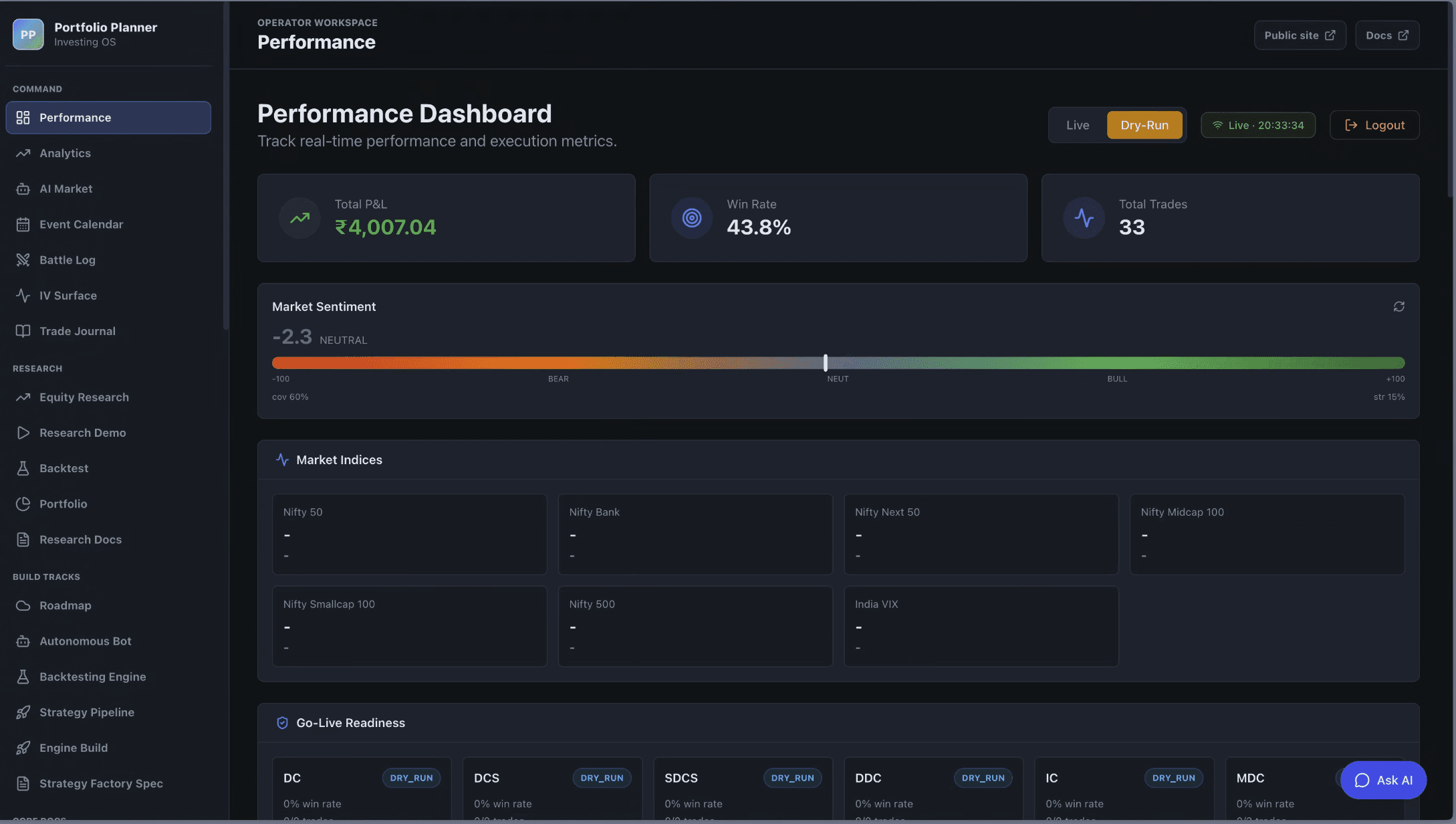
Health is framed as decision context, not a buy or sell instruction. Allocation, income, concentration, and broker state are reviewed together before changing exposure.
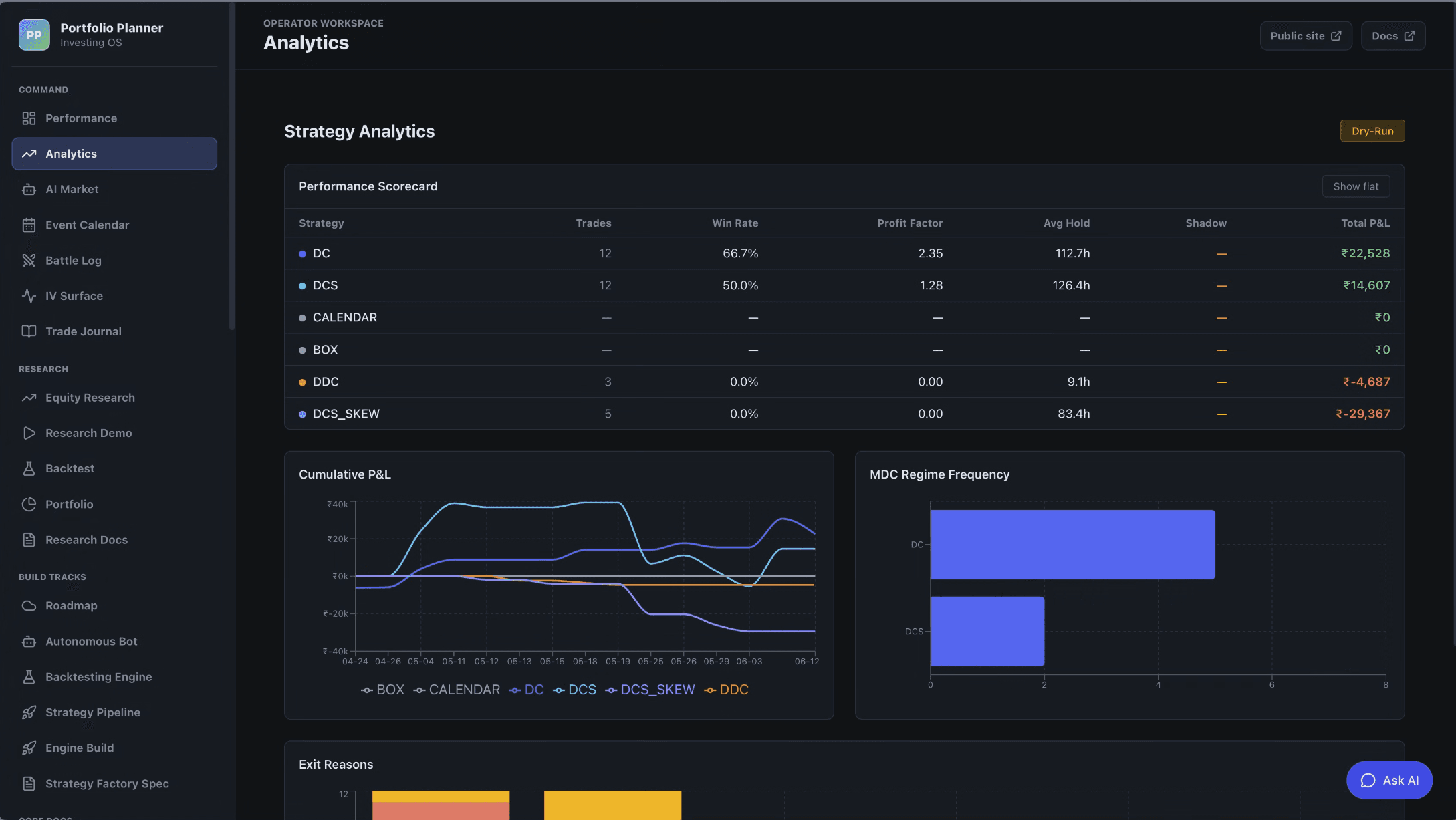
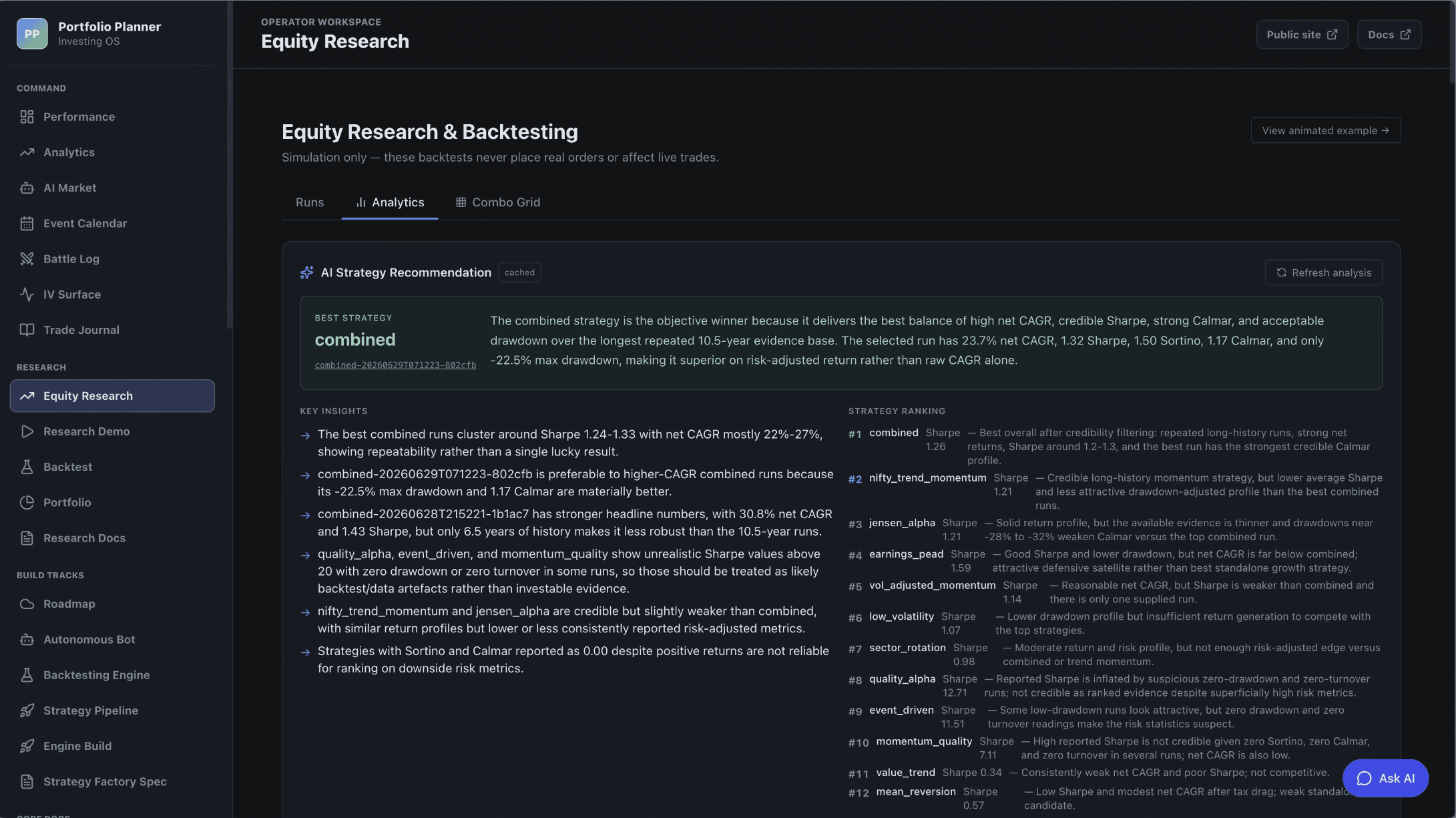
Portfolio Planner connects operational data without becoming only a brokerage screen. Research remains isolated from order access, while strategy evidence is built from backtests and dry-run records.
Connect brokers for visibility, token health, holdings, orders, reconciliation, and controlled operations while credentials remain encrypted and server-side.
Test multi-factor ideas, compare strategy variants, and review evidence before changing the real portfolio.
Replay scanner and exit logic against historical option-chain snapshots and bhavcopy data.
The public benchmark is anchored to a calendar-true 10-year window. Our research run stays visible beside it with the internal strategy context, so the comparison is auditable rather than cherry-picked.
Public fund CAGR versus the combined strategy report.
The research run spans 2016-01-01 to 2026-06-29, uses a point-in-time NIFTY 500 universe, monthly rebalancing, yfinance data, and cost and tax modeling.
Open comparison pageStrategy execution is presented as guarded operations: dry-run, shadow, live promotion, confidence gates, margin checks, kill switches, drawdown caps, and broker-health downgrades.
DRY_RUNSHADOWLIVEBlock new entries while existing positions continue to be monitored and recovered.
Drawdown caps, margin checks, Greeks, and concentration rules make limits explicit.
Token events, reconciliation logs, broker-orphan checks, and alerts are part of operations.
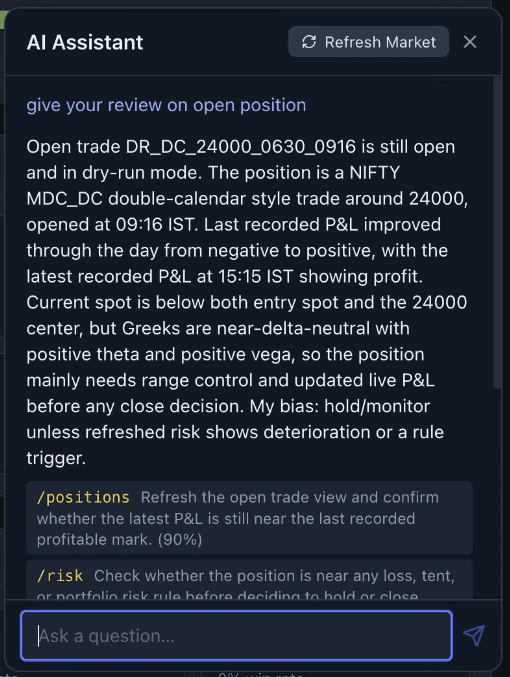
AI summarizes context, explains trades, and surfaces risks while order control stays explicit.
The workspace is built for NSE/NIFTY operations, IST schedules, DhanHQ and Zerodha connections, NSE F&O, CAS imports, and Indian cost and tax assumptions.
Strategy research can account for option-chain snapshots, bhavcopy data, scanner logic, exits, market-session timing, and multi-factor backtest evidence.
Broker connections support visibility, sync health, role separation, token audit events, and controlled operations.
Portfolio context can include mutual-fund statement imports, dividends, income, goals, and India-specific cost assumptions.